
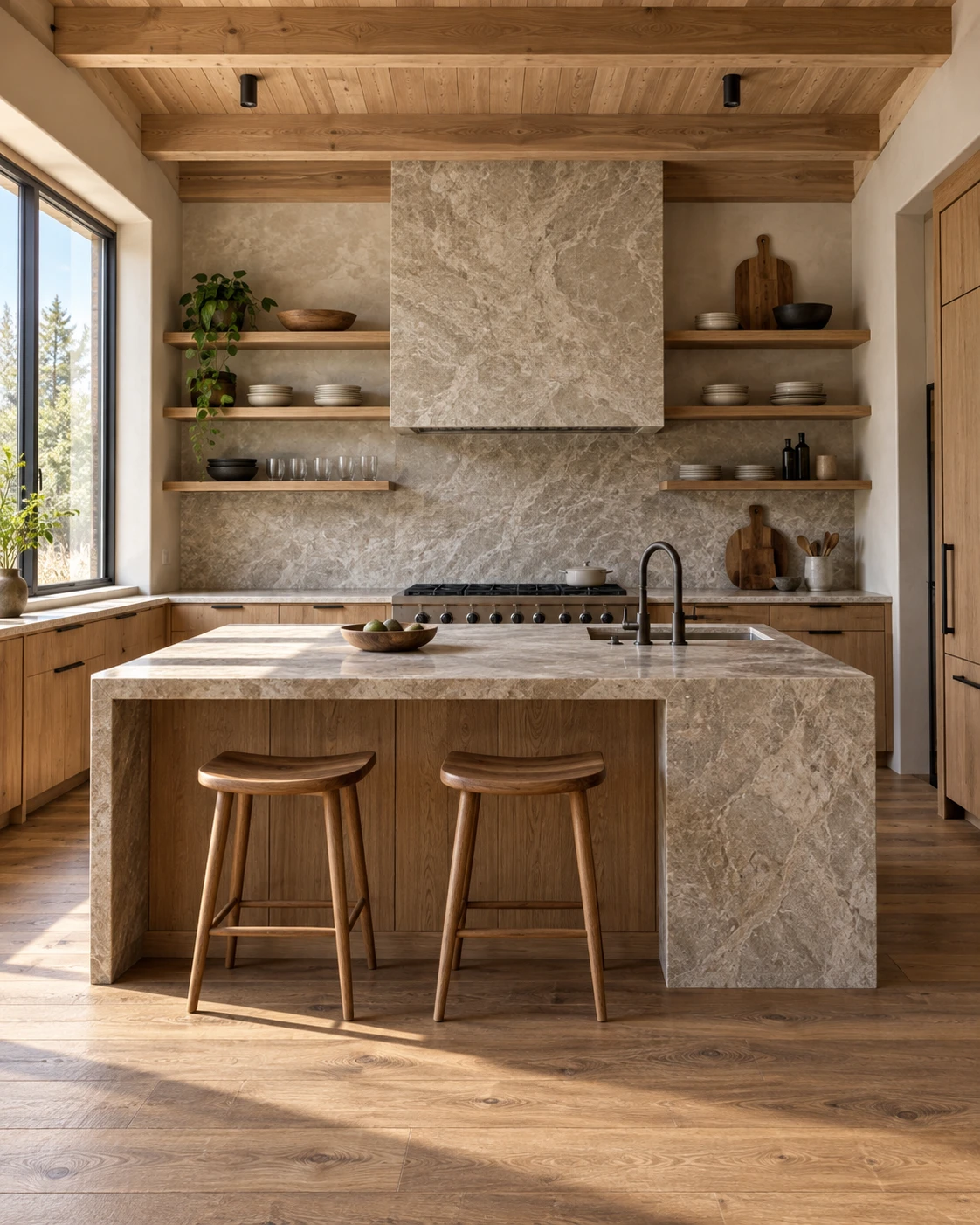
Wood cabinets, a sandy counter and a little dark metal can be a useful starting point for a warm Western kitchen. The tricky part is choosing finishes that look good together, not just on their own.
If you’re planning a kitchen update in Boise or the Treasure Valley, begin with the parts of your home that will stay. Keep a photo or sample of your existing floor, timber ceiling or stone fireplace beside the new samples.
Give one surface the leading role
Choose the detail you most want to notice: expressive wood grain, a patterned counter or a textured backsplash. Then try quieter companions around it.
With a knotty cabinet door, compare a softly patterned counter and simple tile before adding another bold surface. If the counter is the feature you love, try a cabinet sample with less visible variation. The materials don’t have to match. Look for a combination you enjoy seeing together.
Ask to see the range in the wood
A small stain chip tells you less than a finished cabinet door. Ask for examples of the grain, knots and color variation you can expect across several doors.
KraftMaid’s wood guide distinguishes the wavy grain of plain-sawn oak from the more consistent look of quartersawn oak, and notes that lighter stains reveal more of the wood’s character. Use those distinctions to ask specific questions about the cabinetry you’re considering. KraftMaid: Wood characteristics
Set the door sample beside the floor that will remain. Decide whether you like the contrast before trying to make two different woods look identical.
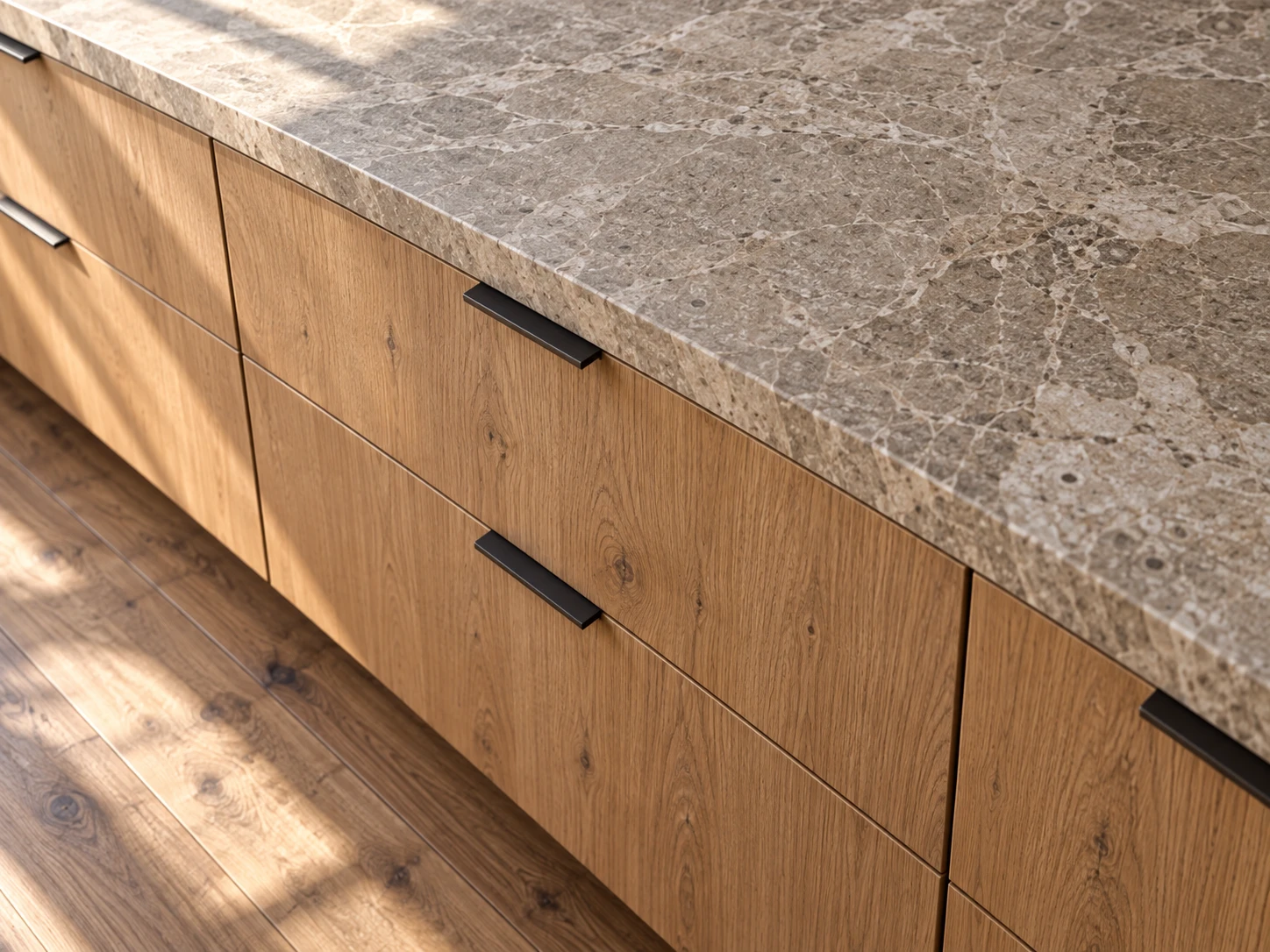
Choose the counter’s care as well as its color
Two cream-colored counters can need different care. Ask for the exact material name and care instructions, then consider how you cook and clean.
For natural stone, ask about staining, acid etching and whether sealing is recommended for that stone. The Natural Stone Institute explains that sealing can improve stain resistance; it does not make stone stain-proof. Natural Stone Institute: Care and cleaning
For an engineered quartz option, check its manufacturer’s instructions. Cambria, for example, recommends protection beneath hot cookware and heat-producing countertop appliances. Think about whether that care routine would work for you. Cambria: Product care
Make two combinations, then remove one
Keep the same existing-floor reference in both. Change only the cabinet, counter or tile you’re undecided about. Put cabinet and backsplash samples upright, with the counter sample flat, so you can judge the materials in their intended positions.
| Check | What to write down |
|---|---|
| Pattern | Which surface do you notice first? Is that the one you intended? |
| Connection | Does the combination work with the floor, trim and adjoining room? |
| Daily care | Which cleaning or heat-protection habits would this choice require? |
| Uncertainty | What do you still need to see or confirm before ordering? |
Check the combinations in your room during the day and with your usual evening lights. Our guide to choosing paint in your home’s light covers that final color check in more detail.
Bring the samples you prefer, a photo of the kitchen and a short list of what will stay when you talk with the team. Explore kitchen remodeling in Boise for the next step, even if some selections are still open.